What Does a Fully Robotic World Actually Look Like?
The video opens like a scene straight out of a sci-fi dream that forgot to be subtle. A futuristic city stretches across the horizon, filled with glowing highways, flying vehicles weaving through the sky, and massive digital billboards flashing information faster than anyone can realistically read. Everything feels advanced, slightly overwhelming, and oddly beautiful at the same time. It’s the kind of world where even traffic looks like it has better technology than your phone.
What Are the Top Pros of a Robotic World?
The first big advantage is efficiency. Everything moves faster, smarter, and more precisely, from automated transport systems to drones managing logistics in real time. Secondly, convenience reaches a new level machines handle repetitive tasks so humans can focus on creativity or, ideally, doing absolutely nothing productive without guilt. Third, safety improves as robotic systems monitor environments and detect risks before they become problems. Fourth, healthcare and services become more advanced, with machines assisting in surgeries, diagnostics, and emergency response. Finally, information access becomes instant, as digital networks connect everything in a seamless flow of data.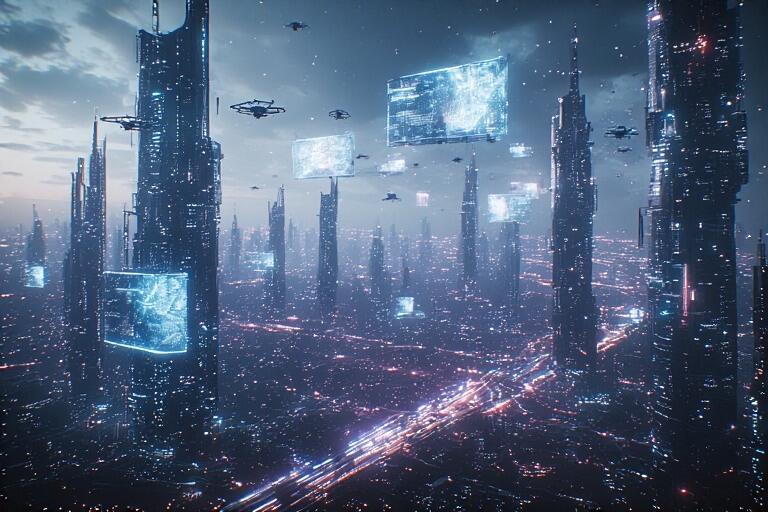
What Are the Cons Hidden Behind All That Glow?
Of course, not everything in a robotic world is perfect. First, there is heavy dependence on technology, meaning even small system failures can cause major disruptions. Second, privacy becomes a serious concern when everything is monitored by smart systems and data-driven infrastructure. Third, human jobs shift dramatically, sometimes disappearing in areas replaced by automation. Fourth, emotional distance can grow as machines take over interactions that were once human-centered. Lastly, there is the constant pressure of living in a hyper-efficient world where everything is optimized even rest might feel like it needs scheduling.
What Happens Inside the High-Tech Core Systems?
Deep within the city, the video shifts to a database control room filled with glowing interfaces and hovering drones navigating complex digital networks. Machines communicate silently through streams of data, updating systems across the entire city in real time. It looks organized, intelligent, and slightly intimidating, like the world itself is being managed by invisible logic. Every movement is calculated, every update precise, and every system interconnected in ways that feel both impressive and overwhelming.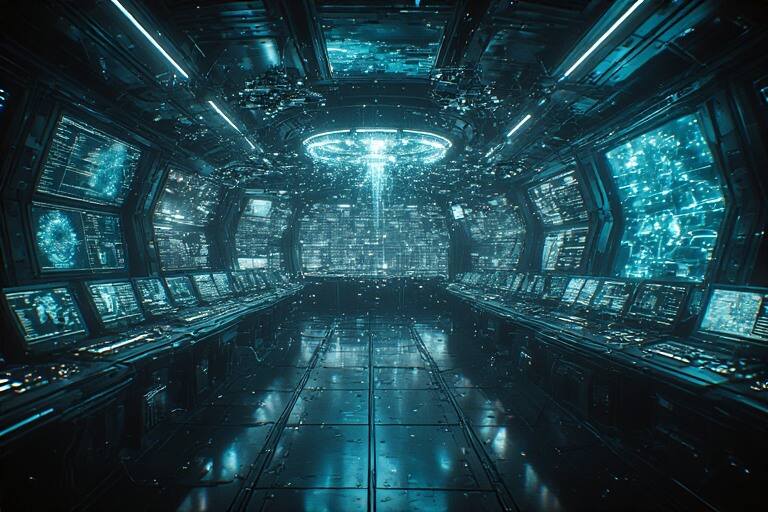
Is This Future Exciting or a Little Too Perfect?
By the end, the robotic world feels like a mix of awe and uncertainty. Flying vehicles and glowing highways create a visually stunning environment, but the reliance on machines raises questions about balance. It’s exciting, efficient, and visually breathtaking but also a reminder that too much automation might come with trade-offs. Still, as a cinematic vision of the future, it’s hard not to be fascinated by a world where technology doesn’t just assist life it becomes the entire environment itself.